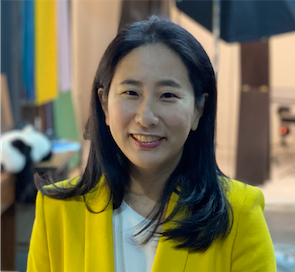
Hyeju Jang
Assistant Professor, Department of Computer Science
Luddy School of Informatics, Computing, and Engineering
Indiana University Indianapolis
hyejuj [at] iu [dot] edu IT 346, 535 W Michigan St, Indianapolis, IN
I build computational models of language in context: how it shapes meaning, what it reveals about people and populations, and how AI systems interpret it.
Language does more than state facts: it frames, hedges, organizes, and signals who we are and how we think. My work focuses on these layers of meaning beyond literal content, with particular attention to metaphor and figurative framing, discourse structure and coherence, and stance and social positioning.
To study these layers, I turn linguistic theories into computational measurements and combine them with machine learning and multimodal signals. I evaluate these models in controlled studies and in settings where language carries real consequences, especially in health and education. My goal is to build language technologies that respond to what language does, not only to what it says.
When AI systems judge human language, what are they actually responding to, and what does that reveal about how meaning is represented?
My research spans three connected directions
- Machine judgment and trustA current emphasis on what language models respond to when they interpret and evaluate human language, and when those judgments can be trusted.
- Meaning in contextHow metaphor, framing, discourse structure, coherence, and social positioning shape interpretation.
- Language as evidence and interventionWhat language and multimodal behavior reveal about cognition, health, learning, and public attitudes; and how language technologies can support care and education.
I received my Ph.D. from the Language Technologies Institute at Carnegie Mellon University, and was a CIHR Health System Impact Postdoctoral Fellow at the University of British Columbia and the BC Centre for Disease Control.
Teaching
- Natural Language ProcessingCSCI-B 651, graduate
- Machine LearningCSCI-B 455/555
Publications
Grouped by research direction and theme; within each subgroup, newest first. * equal contribution, alphabetically ordered.
Machine judgment and trust
How language models interpret and evaluate human text, which cues their judgments depend on, and when those judgments can be trusted.
- A Mirage of Coherence: How Metaphor Impacts Language Models’ Discourse Coherence Assessment Wanting Ning, Brian Choi, Eun Jin Paek, Hyeju Jang Conference on Language Modeling (COLM) 2026, to appear Meaning-preserving metaphorical rewrites systematically inflate models’ coherence judgments.
- Investigating Counterfactual Unfairness in LLMs towards Identities through Humor Shubin Kim, Yejin Son, Junyeong Park, Keummin Ka, Seungbeen Lee, Jaeyoung Lee, Hyeju Jang, Alice Oh, Youngjae Yu Annual Meeting of the Association for Computational Linguistics (ACL), pp. 44092–44138, 2026 Swapping who speaks and who is addressed, with content held fixed, shifts models’ judgments of the same joke. [link]
- Large Language Models Are Better Logical Fallacy Reasoners with Counterargument, Explanation, and Goal-Aware Prompt Formulation Jiwon Jeong, Hyeju Jang*, Hogun Park* Findings of the Nations of the Americas Chapter of the Association for Computational Linguistics (NAACL), 2025
- Halu-NLP at SemEval-2024 Task 6: MetaCheckGPT - A Multi-task Hallucination Detection Using LLM Uncertainty and Meta-models Rahul Mehta, Andrew Hoblitzell, Jack O’Keefe, Hyeju Jang, Vasudeva Varma International Workshop on Semantic Evaluation (SemEval) at NAACL, 2024 Ranked 1st, model-agnostic track.
Meaning in context
A longstanding research program on how metaphor, figurative framing, and discourse organization shape interpretation, and how these insights inform computational models of language and machine judgment.
- Infrequent Discourse Relation Identification Using Data Programming Xing Zeng, Giuseppe Carenini, Raymond Ng, Hyeju Jang 5th Pacific Northwest Regional NLP Workshop (NW-NLP), 2018
- Finding Structure in Figurative Language: Metaphor Detection with Topic-based Frames Hyeju Jang, Keith Maki, Eduard Hovy, Carolyn Penstein Rosé 18th Annual SIGDIAL Meeting on Discourse and Dialogue, pp. 320–330, 2017 [link]
- Modeling Dialogue Acts Using Content Word Filtering and Speaker Preferences Yohan Jo, Michael Miller, Hyeju Jang, Carolyn Penstein Rosé Conference on Empirical Methods in Natural Language Processing (EMNLP), pp. 2169–2179, 2017 [link]
- Computational Modeling of Metaphor in Discourse Hyeju Jang PhD thesis, Carnegie Mellon University, 2017 [PDF]
- Metaphor Detection with Topic Transition, Emotion and Cognition in Context Hyeju Jang, Yohan Jo, Qinlan Shen, Michael Miller, Seungwhan Moon, Carolyn Penstein Rosé 54th Annual Meeting of the Association for Computational Linguistics (ACL), pp. 216–225, 2016 [PDF]
- Metaphor Detection in Discourse Hyeju Jang, Seungwhan Moon, Yohan Jo, Carolyn Penstein Rosé 16th Annual SIGDIAL Meeting on Discourse and Dialogue, pp. 384–392, 2015 [PDF]
- Effects of Situational Factors on Metaphor Detection in an Online Discussion Forum Hyeju Jang, Miaomiao Wen, Carolyn Penstein Rosé Third Workshop on Metaphor in NLP at NAACL, pp. 1–10, 2015 [PDF]
- Conversational Metaphors in Use: Exploring the Contrast between Technical and Every Day Notions of Metaphor Hyeju Jang, Mario Piergallini, Miaomiao Wen, Carolyn Penstein Rosé Second Workshop on Metaphor in NLP at ACL, pp. 1–10, 2014 [PDF]
Language as evidence and intervention
How language and multimodal behavior reveal cognition, mental state, learning, and public attitudes; and how language technologies support care, communication, and education.
Cognition and clinical communication
- Estimating the Risk of Depression and Care Burden among Dementia Caregivers: A Feasibility Study Omid Ghadami, Kruthika Gaddam, Mahesh Moodukonaje, Hyeju Jang*, Hee-Tae Jung* IEEE-EMBS International Conference on Biomedical and Health Informatics (IEEE BHI), 2025
- Clinical Application of Large Language Models for Intervention Plan Development in Speech-Language Pathology Namhee Kim, Mercy Homer, Hyeju Jang American Journal of Speech-Language Pathology (AJSLP), 2025
- Multimodal Classification of Alzheimer’s Disease by Combining Facial and Eye-Tracking Data Shih-Han Chou, Miini YC M Teng, Harshinee Sriram, Chuyuan Li, Giuseppe Carenini, Cristina Conati, Thalia Field, Hyeju Jang, Gabriel Murray Machine Learning for Health Symposium (ML4H), 2024
- Prediction of Alzheimer’s Using Deep-learning Methods on Webcam-Based Gaze Data Anuj Harisinghani, Cristina Conati*, Giuseppe Carenini*, Thalia Field*, Hyeju Jang*, Gabriel Murray* ACM Symposium on Eye Tracking Research & Applications (ETRA), 2023
- Evaluating Web-Based Automatic Transcription for Alzheimer Speech Data: Transcript Comparison and Machine Learning Analysis Thomas Soroski, Thiago da Cunha Vasco, Sally Newton-Mason, Saffrin Granby, Caitlin Lewis, Anuj Harisinghani, Matteo Rizzo, Cristina Conati, Gabriel Murray, Giuseppe Carenini, Thalia Field, Hyeju Jang Journal of Medical Internet Research Aging (JMIR Aging), 2022 [link]
- Classification of Alzheimer’s Disease Leveraging Multi-Task Machine Learning Analysis of Speech and Eye-Movement Data Hyeju Jang, Thomas Soroski, Matteo Rizzo, Oswald Barral, Anuj Harisinghani, Sally Newton-Mason, Saffrin Granby, Caitlin Lewis, Pavan Tutt, Giuseppe Carenini, Cristina Conati, Thalia Field Frontiers in Human Neuroscience, vol. 15, 2021 [link]
- Classification of Alzheimer’s Disease Leveraging Multi-Task Language and Eye-Movement Data Hyeju Jang, Thomas Soroski, Oswald Barral, Anuj Harisinghani, Matteo Rizzo, Saffrin Granby, Sally Newton-Mason, Pavan Tutt, Caitlin Lewis, Giuseppe Carenini, Cristina Conati, Thalia Field Workshop on AI for Aging, Rehabilitation and Intelligent Assisted Living (ARIAL) at IJCAI, 2021
- Identifying Language Features Associated with Needs of Ovarian Cancer Patients and Caregivers Using Social Media Young Ji Lee, Hyeju Jang, Grace Campbell, Giuseppe Carenini, Teresa Thomas, Heidi Donovan Cancer Nursing, 2021 [link]
- Exploring Neural Models for Predicting Dementia from Language Weirui Kong, Hyeju Jang, Giuseppe Carenini, Thalia Field Computer Speech and Language, 68, 101181, 2021 [link]
- Non-Invasive Classification of Alzheimer’s Disease Using Eye Tracking and Language Oswald Barral*, Hyeju Jang*, Sally Newton-Mason, Sheetal Shajan, Thomas Soroski, Giuseppe Carenini, Cristina Conati, Thalia Field Machine Learning for Healthcare Conference (MLHC), pp. 813–841, 2020 [link]
- A Neural Model for Predicting Dementia from Language Weirui Kong, Hyeju Jang, Giuseppe Carenini, Thalia Field Machine Learning for Healthcare Conference (MLHC), pp. 270–286, 2019 [link]
- Predicting Patient Needs on an Ovarian Cancer Online Discussion Forum Hyeju Jang, Young Ji Lee, Giuseppe Carenini, Raymond Ng, Grace Campbell, Kendall Ho Canadian Conference on Artificial Intelligence (CanAI), pp. 492–497, 2019 [link]
- Exploring Discourse Coherence Features for Dementia Detection Hyeju Jang, Vaden Masrani, Giuseppe Carenini, Raymond Ng, Gabriel Murray, Thalia Field 5th Pacific Northwest Regional NLP Workshop (NW-NLP), 2018
Learning and educational support
- Developing, Evaluating, and Refining an Automatic Generator of Diagnostic Multiple Choice Cloze Questions to Assess Children’s Comprehension While Reading Jack Mostow, Yi-Ting Huang, Hyeju Jang, Anders Weinstein, Joe Valeri, Donna Gates Natural Language Engineering, pp. 1–50, 2016 [link]
- Towards an Agile Approach to Adapting Dynamic Collaboration Support to Student Needs David Adamson, Gregory Dyke, Hyeju Jang, Carolyn Penstein Rosé International Journal of Artificial Intelligence in Education 24.1, pp. 92–124, 2014 [link]
- Intensification of Group Knowledge Exchange with Academically Productive Talk Agents David Adamson, Colin Ashe, Hyeju Jang, David Yaron, Carolyn Penstein Rosé Conference on Computer Supported Collaborative Learning (CSCL), pp. 10–17, 2013 [PDF]
- Generating Diagnostic Multiple Choice Comprehension Cloze Questions Jack Mostow, Hyeju Jang Seventh Workshop on Building Educational Applications Using NLP at NAACL, pp. 136–146, 2012 [PDF]
Population and public-health discourse
- Natural Language Processing to Evaluate Texting Conversations Between Patients and Healthcare Providers During COVID-19 Home-Based Care in Rwanda at Scale Richard T Lester, Matthew Manson, Muhammed Semakula, Hyeju Jang, Hassan Mugabo, Ali Magzari, Junhong Ma Blackmer, Fanan Fattah, Simon Pierre Niyonsenga, Edson Rwagasore, Charles Ruranga, Eric Remera, Jean Claude S. Ngabonziza, Giuseppe Carenini, Sabin Nsanzimana PLOS Digital Health, 2025
- Public Attitudes Toward ChatGPT on Twitter: Sentiments, Topics, and Occupations Ratanond Koonchanok, Yanling Pan, Hyeju Jang Social Network Analysis and Mining, 2024
- Topic and Sentiment Analysis of Reddit’s Vaping-Cessation Community Joongeun Choi, Hyeju Jang IEEE International Conference on Bioinformatics and Biomedicine (BIBM), 2023
- Tracking Public Attitudes toward COVID-19 Vaccination on Tweets in Canada: Using Aspect-based Sentiment Analysis Hyeju Jang, Emily Rempel, Ian Roe, Giuseppe Carenini, Naveed Janjua Journal of Medical Internet Research (JMIR), 2022 [link]
- Tracking COVID-19 Discourse on Twitter in North America: Infodemiology Study Using Topic Modeling and Aspect-based Sentiment Analysis Hyeju Jang, Emily Rempel, David Roth, Giuseppe Carenini, Naveed Z. Janjua Journal of Medical Internet Research (JMIR), 2021 [link]
- Exploratory Analysis of COVID-19 Related Tweets in North America to Inform Public Health Institutes Hyeju Jang, Emily Rempel, Giuseppe Carenini, Naveed Janjua EMNLP Workshop on NLP for COVID-19 (Part 2), 2020 [link]
- Stigma Annotation Scheme and Stigmatized Language Detection in Health-Care Discussions on Social Media Nadiya Straton, Hyeju Jang, Raymond Ng Language Resources and Evaluation Conference (LREC), pp. 1178–1190, 2020 [link]
- Predictive Modelling of Stigmatized Behaviour in Vaccination Discussions on Facebook Nadiya Straton, Raymond Ng, Hyeju Jang, Ravi Vatrapu, Raghava Rao Mukkamala IEEE International Conference on Bioinformatics and Biomedicine (BIBM), pp. 2561–2568, 2019 [link]
- Computational Modeling of Stigmatized Behaviour in Pro-vaccination and Anti-vaccination Discussions on Social Media Nadiya Straton, Hyeju Jang, Raymond Ng, Ravi Vatrapu, Raghava Rao Mukkamala IEEE International Conference on Bioinformatics and Biomedicine (BIBM), pp. 2673–2681, 2019 [link]
Additional NLP and interdisciplinary work
Earlier and collaborative work on interpretable NLP, semantic reasoning, clinical text and medical knowledge, and context-aware systems.
Interpretable and visual NLP
- Generating Descriptive Explanations of Machine Learning Models Using LLM Andrew Pang, Hyeju Jang, Shiaofen Fang From Theory to Practice: Workshop on Large Language and Foundation Models at IEEE Big Data, 2024
- T3-Vis: A Visual Analytic Framework for Training and Fine-Tuning Transformers in NLP Raymond Li, Wen Xiao, Lanjun Wang, Hyeju Jang, Giuseppe Carenini Conference on Empirical Methods in Natural Language Processing (EMNLP), 2021 [link]
- KW-ATTN: Knowledge Infused Attention for Accurate and Interpretable Text Classification Hyeju Jang, Seojin Bang, Wen Xiao, Giuseppe Carenini, Raymond Ng, Young Ji Lee Deep Learning Inside Out (DeeLIO) Workshop at NAACL, pp. 96–107, 2021 [link]
- OCTVis: Ontology-based Comparison of Topic Models Amon Ge, Hyeju Jang, Giuseppe Carenini, Kendall Ho, Young Ji Lee IEEE Visualization Conference (VIS), pp. 66–70, 2019 [link]
Reasoning and semantic representation
- Unsupervised Hypernymy Directionality Prediction Using Context Terms Thushara Naduvilakandy, Hyeju Jang, Mohammad A. Hasan Natural Language Processing Journal, 2024
- Improving Multi-hop Logical Reasoning in Knowledge Graphs with Context-Aware Query Representation Learning Jeonghoon Kim, Heesoo Jung, Hyeju Jang, Hogun Park Findings of the Association for Computational Linguistics (ACL), 2024
- Extracting Events with Informal Temporal References in Personal Histories in Online Communities Miaomiao Wen, Zeyu Zheng, Hyeju Jang, Guang Xiang, Carolyn Penstein Rosé 51st Annual Meeting of the Association for Computational Linguistics (ACL), pp. 836–842, 2013 [PDF]
- Inferring Selectional Preferences from Part-of-Speech N-grams Hyeju Jang, Jack Mostow 13th Conference of the European Chapter of the ACL (EACL), pp. 377–386, 2012 [PDF]
- Design of Topic Detection and Tracking System for QA in Encyclopedia Hyeju Jang, Yuchul Jung, Bo-Yeong Kang, Sa Kwang Song, Yun Jin, Hoon Song, Sung Hyon Myaeng Korean Information Science Society Conference, pp. 22–24 · in Korean, 2006 [link]
Clinical text and medical knowledge
- Procedural Entity Extraction for Procedural Knowledge on Medline Abstracts Sakwang Song, Hungsun Oh, Yoonjung Choi, Hyeju Jang, Sung-Hyon Myaeng, Sungpil Choi, Yunsoo Choi Korean Information Science Society Conference, pp. 154–157 · in Korean, 2011 [link]
- Integration of Low Level Linguistic Information for Clinical Document Semantic Tagging Hyeju Jang, Yun Jin, Sung Hyon Myaeng IEEE Conference on Information Reuse and Integration (IEEE-IRI), pp. 292–297, 2006 [link]
- Text Mining for Medical Documents Using a Hidden Markov Model Hyeju Jang, Sa Kwang Song, Sung Hyon Myaeng Asia Information Retrieval Symposium (AIRS), LNCS 4182, pp. 553–559, 2006 [link]
- Semantic Tagging for Medical Knowledge Tracking Hyeju Jang, Sa Kwang Song, Sung Hyon Myaeng 28th Annual International Conference IEEE Engineering in Medicine and Biology Society (IEEE-EMBC), pp. 6257–6260, 2006 [link]
- High Level Semantic Tagging in Clinical Documents Using a HMM Model Hyeju Jang, Sa Kwang Song, Sung Hyon Myaeng Korean Information Science Society Conference, pp. 19–21 · in Korean, 2006 [link]
Context-aware intelligent systems
- Personal Information Access Using Proactive Search and Mobile Hypertext Hyeju Jang, Seongchan Kim, Wookhyun Shin, Sung-Hyon Myaeng IEEE Intelligent Systems, vol. 25, no. 1, pp. 27–36, 2010 [link]
- Personalized Healthcare through Intelligent Gadgets Hyeju Jang, Sanghyun Kim, Changseok Bae 30th Annual International Conference IEEE Engineering in Medicine and Biology Society (IEEE-EMBC), pp. 3308–3311, 2008 [link]
- Context Representation of Intelligent Gadgets for Event-driven Services Hyeju Jang, Kuksang Jeong, Jongho Won, Changseok Bae International Conference on Consumer Electronics (ICCE), pp. 1–2, 2008 [link]
- MEMORIA: Personal Memento Service Using Intelligent Gadgets Hyeju Jang, Jongho Won, Changseok Bae HCI International Conference (HCII), pp. 331–339, 2007 [link]